5 Ways Ontario Realtors Are Using ContractCheck in Their Buyer Process
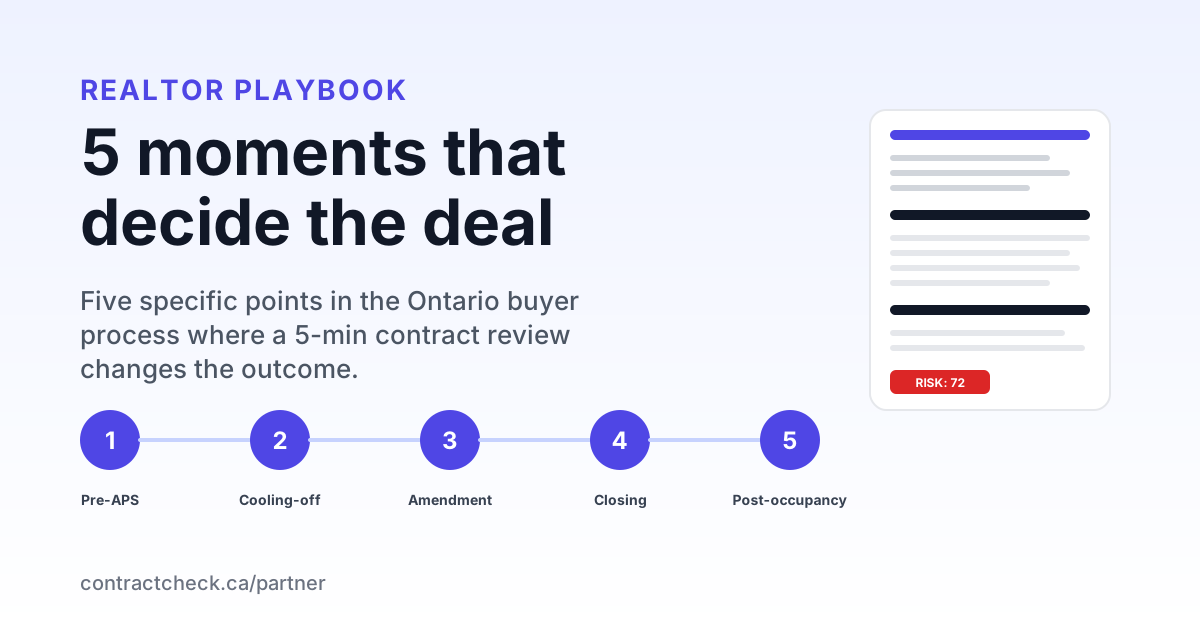
Most Ontario agents treat pre-construction contracts as a lawyer problem that happens months before closing. But the moments that actually decide whether a deal survives — the 10-day cooling-off window, the post-occupancy walkthrough, the material amendment, the financing condition — all happen before the lawyer is meaningfully involved. They happen on your watch.
ContractCheck was built to fill that gap: a 5-minute AI-powered risk review that agents can hand to buyers exactly when a question would otherwise stall the deal. Here are five specific moments in the buyer process where partner agents are using it, and what it changes.
1. Pre-APS: the "is this normal?" conversation
A buyer walks out of a sales office on Saturday with a 70-page APS and a Monday deadline to sign. They don't want to pay $400–$800 for a same-day lawyer review. They call you. "Is this normal?"
This is the highest-leverage moment to hand them a contract review. You delegate one of your 10 monthly free reviews, they upload the APS, and within 5 minutes they have a risk score, severity-tagged findings, and a PDF they can forward to their lawyer. The questions they bring back are sharper, the lawyer's billable time shrinks, and the deal moves. Worst case: the review flags something genuinely catastrophic and you just saved the buyer $50K+.
Agent action: send a delegated review invite with a note — "Before you sign on Monday, take 5 minutes to run this. I'll look at it with you tomorrow."
2. Cooling-off period: the 10-day review
Under Ontario's Protecting Condominium Owners Act, 2015 (and section 73 of the Condominium Act, 1998), pre-construction condo buyers have a 10-day rescission window after receiving both the signed APS and the builder's disclosure statement. Many buyers get halfway through the 10 days before realizing they haven't actually read the contract.
Running a ContractCheck review on Day 1 or 2 of the cooling-off window is the single most impactful thing a buyer can do. It surfaces the adjustments, the occupancy fee structure, the assignment restrictions, and any one-sided amendment clauses — in time for the buyer to either walk away cleanly, negotiate amendments, or sign with clear eyes.
As the buyer's agent, you are not giving legal advice when you hand them a contract review tool. You are giving them a better-informed starting point for the lawyer conversation that follows. That's well inside your scope.
3. Post-amendment: re-running the review when the builder changes terms
Most pre-construction contracts get amended at least once — sometimes twice or three times — between signing and closing. Builders change condo fees, reduce amenities, delay occupancy, tweak unit specifications. Under Ontario law, a material amendment triggers a fresh 10-day rescission window.
When an amendment arrives, most buyers glance at the email and file it. You can differentiate as an agent by proactively using the Pro plan's contract comparison feature — upload the original APS and the amended version, and the report highlights every changed clause with a risk delta. Buyers who might have let a material amendment pass by will actually see what's different, and you look like the agent who caught it.
4. Closing countdown: when financing gets shaky
The 2026 closing crunch is real. Many buyers who signed pre-con contracts at the 2022 peak are now facing appraisals 20–30% below their purchase price, and lenders are refusing to fund the gap. When a buyer calls you six weeks out with "my mortgage fell through," the first question is almost always: what are my options?
A Crisis-plan review is designed for exactly this moment. It digests the contract's default clauses, the deposit forfeiture rules, the specific grounds for builder breach, and any termination conditions the buyer might be able to invoke. The review doesn't replace a real estate lawyer — but it gives the buyer and the lawyer a shared, plain-English map of what the contract actually allows. Lawyer conversations that would take 3 billable hours to set up take 30 minutes instead.
Partner agents often position this as: "I don't want you in limbo while we figure this out. Let's get the contract reviewed today so we both know exactly what the builder can and can't do next." That's a reassurance most buyers will never forget.
5. After closing: the occupancy-fee audit
The least-glamorous but highest-frequency use case is after occupancy. New condo owners rent from the builder during the "interim occupancy" phase — which in Ontario can last 3–18 months. Occupancy fees include phantom interest on the unpaid balance, estimated condo fees, and property tax components. Builders calculate these opaquely, and occupancy-fee disputes are one of the most common post-closing complaints.
Buyers who run their occupancy fee statement through ContractCheck (using their APS + Schedule B as context) get a plain-English breakdown of what they should be paying versus what's actually itemized. A handful of buyers each year will find a $100–$400/month discrepancy that's worth raising.
Agents who do one post-closing check-in — "just send me your first occupancy statement when it arrives, we'll run it against the APS" — earn repeat business and referrals at a rate their competitors rarely match.
How to integrate this into your process, in one week
- Day 1: Sign up at contractcheck.ca/partner. Complete Stripe Connect KYC.
- Day 2: Add your referral link to your email signature.
- Day 3: Delegate a free review to your most engaged current buyer. Text them so they actually open the email.
- Day 4–5: Send one past-buyer outreach: "Running a check-in on anyone who bought pre-con in 2022–2023. Free 5-min contract review on me — text me if you want the link."
- Day 7: Check your partner dashboard. Note which flows had the most buyer engagement. Double down on those.
None of this requires new client process, new email templates, or new conversations. It's five specific moments in the flow you already run, each made measurably better by a 5-minute AI review you can hand over in one click.